



-1.png)
Is it Still Important to Have an Effective Property Management Website?
Listen to the article
Is it Still Important to Have an Effective Property Management Website?
Here's an uncomfortable truth for anyone who built their property management website five years ago: the way owners find your business has changed. The problem may not be your website itself. It may be the strategy your website was originally built to support.
For years, property management websites were built around a familiar search engine optimization (SEO) process: rank well, get the click, and convince the visitor to reach out.
That strategy still matters, but artificial intelligence (AI) is changing what happens before someone ever lands on your website. Before someone ever reaches your website, they may interact with AI-generated answers that summarize options, compare companies, and influence their next step.
Here, we’re going to break down how you can build a website that serves both people and the search engines they’re using.
TL;DR: The Importance of an Effective Property Management Website
Property management websites aren't just competing for clicks anymore. They're competing to be understood and recommended by search engines and AI tools before a property owner ever visits your site. To stay competitive, your website should:
- Clearly explain who you serve, what you do, and where you operate.
- Build trust with helpful content, reviews, local market expertise, and clear service information.
- Make it easy for owners to take the next step with strong calls to action and a seamless user experience.
- Connect with the systems that support your marketing, lead management, and property management operations.
A modern property management website isn't just a digital brochure. It's a visibility, trust, and lead-generation tool designed for both people and AI-powered search.
How AI Is Changing the Way Property Owners Search for Management Companies
If you built your property management website a few years ago, you probably built it for the way owners searched at the time. They searched, clicked, compared, and contacted the companies that stood out.
But the way owners find property management companies is changing.
In the past, a property owner looking for help managing their rental would likely start with a Google search like “best property management company in Tampa.” From there, they controlled the research process. They visited different websites, compared services, read reviews, and decided which companies earned a spot on their shortlist.
Today, that research process often starts earlier. The same owner might ask Google or an AI tool a more detailed question, like: “Who is the best property management company in Tampa for a single-family rental owner who lives out of state?”
Instead of sorting through every option themselves, they may receive an answer that already organizes the information for them. AI tools can pull together details about your services, reviews, reputation, location, and online presence before an owner ever lands on your website.
This doesn’t mean your website is less important. It means its role has changed.
Your website is no longer only a destination for people who already know your company. It’s part of the information ecosystem that shapes how property owners discover, evaluate, and choose whom they trust with their investment.
Why Property Management Websites Matter More, Not Less
When search engines and AI tools summarize your company for potential clients, the quality of that summary matters. Because of this, your website matters even more than it did just a few years ago.
Your Website Has Several Audiences Now
A strong property management website has to do more than look professional. It needs to answer owner questions, explain your services, and organize information in a way both people and technology can understand.
Search engines and AI tools need clear information about your business, including who you serve, where you operate, and what makes your management services different. Property owners need a website that builds confidence, answers their concerns, and makes it easy to take action.
If your website doesn’t clearly communicate this information, you risk being overlooked before an owner ever reaches out. If they do find you, your website still needs to prove why you’re the right company to trust with their investment.
Trust Is an Input Now, Not Just an Impression
A human visitor feels trust. An answer engine looks for signals that support it. Both rely on similar information: clear service descriptions, consistent details across the web, real reviews, transparent pricing, and proof that your company can answer the questions people are asking.
When your property management website clearly explains how you handle leasing, maintenance, communication, owner reporting, and other important parts of the management experience, you’re not only reassuring potential clients. You’re giving AI tools the information they need to understand your business and recommend it accurately.
Your Website Is Still Your Best Lead Engine
An owner who reaches your site after an AI mentions you is warmer than any cold lead you've worked. Owner-focused calls to action like a free rental analysis, short forms, and pages written for owners turn that visitor into a conversation. This is the part of property management marketing that AI can't do for you. It can recommend you, but your website still needs to move the lead through the funnel.
Local Search Is Where Answer Engines Look First
Property management is local, and every AI assistant knows it. Ask any of them for a manager in a specific city, and they lean hard on local signals: your Google Business Profile, service-area pages, consistent name-address-phone details, reviews tied to a real place. Strong property management website design builds those in — fast, mobile pages, clean structure, and a dedicated page for each market you serve. Skip them, and you're invisible to the exact systems people now ask first.
The Tenant Experience Shapes Your Reputation
Owners want to work with property managers who create a better experience for their residents, and that experience often shows up through online reviews and reputation signals that both people and AI tools can reference.
A website that makes it easy for tenants to pay rent, submit maintenance requests, and find answers creates a smoother experience for everyone involved. Better tenant resources can lead to stronger relationships, better retention, and a stronger online presence that supports how your company appears in search.
Custom Website Strategy vs. Quick-Start Website Builds
So why not grab a quick-start property management website and move on?
The answer depends on what’s behind it.
Not every website needs to be built completely from scratch. Proven frameworks, layouts, and technology can help property management companies launch faster and create a better experience without reinventing the wheel.
The difference is whether your website is built around your business.
A basic plug-and-play website may help you get online quickly, but it often relies on the same messaging, structure, and content used by dozens of other companies. Over time, that can make it harder for owners and search engines to understand what makes your company different.
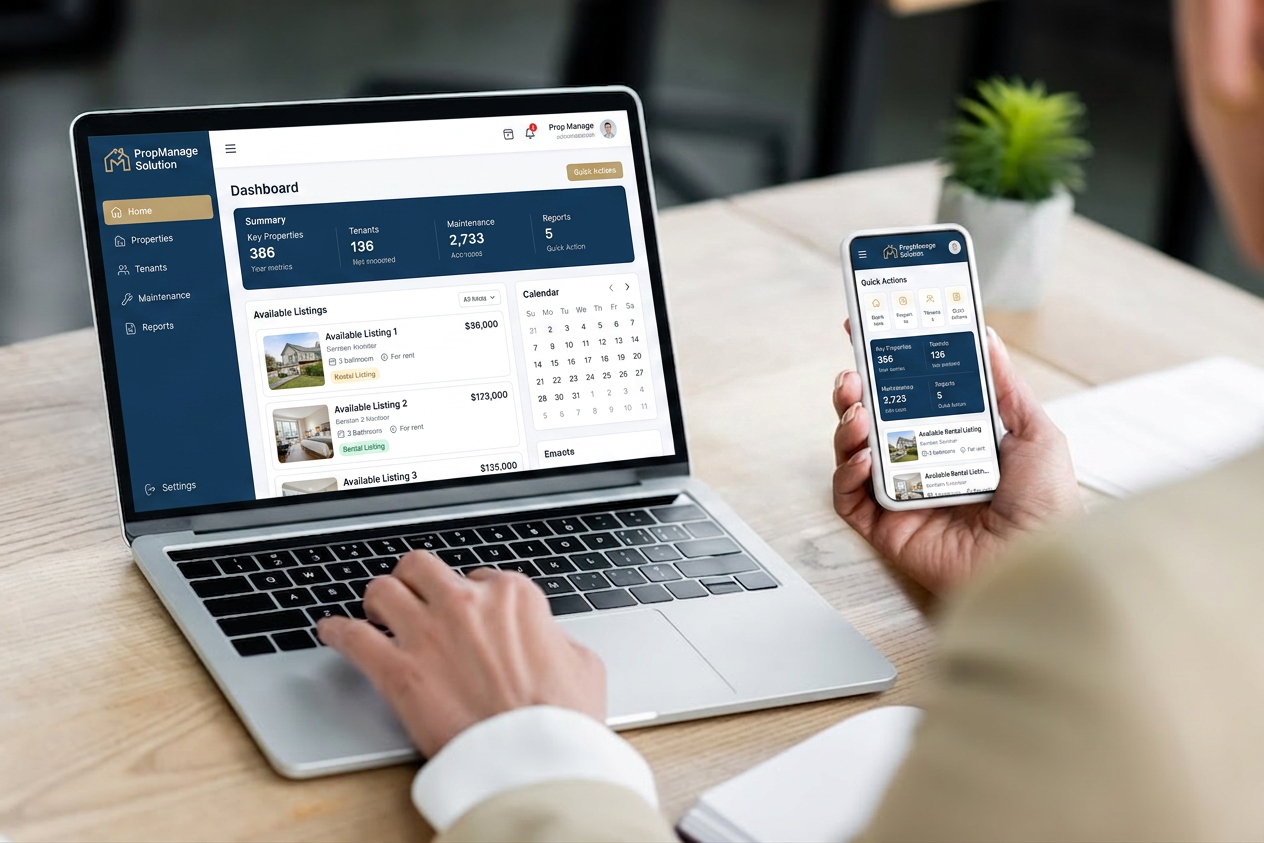
A strategic property management website combines efficient design with custom content, SEO, answer engine optimization, conversion paths, and integrations that support your growth. It reflects your services, your markets, your team, and the reasons an owner should choose you.
At Geekly, that’s the goal behind every website we build. Your site shouldn’t just look good. It should increase visibility, build trust, convert visitors, and connect with the systems that turn interested owners into real opportunities. We combine SEO, AEO strategy, conversion-focused design, and connected technology to help property management companies get found and turn opportunities into growth.
What Every Effective Property Management Website Includes
Whether a human or a machine is reading, a property management company website that performs should have the same foundation:
- A clear, specific value proposition that’s shown immediately, including what you do, who you serve, and where you’re located.
- Separate, obvious paths for owners and tenants so each audience can quickly find what they need.
- Service-area pages for the markets you serve to strengthen your local visibility and provide clear location context.
- Direct calls to action, like a free rental analysis, paired with simple forms that make it easy to take the next step.
- Well-structured answers to the real questions owners ask, creating helpful content for both search engines and potential clients.
- Portal integrations for rent payments, applications, and maintenance requests.
- Real social proof through reviews, testimonials, and case studies.
- Fast, mobile-friendly design that creates a better experience for visitors and supports search performance.
When these pieces work together, your website becomes easier to understand, easier to recommend, and better prepared to turn interested owners into real conversations.
Property Management Website FAQs
What makes a good property management website?
A good property management website is clear, fast, and trustworthy for both people and AI tools. Visitors should quickly understand what you do, owners and tenants should be able to find the right information, and your content should be structured in a way that helps answer engines, search engines, and humans accurately understand your business.
Why is website design important for property management companies?
Property management web design now shapes how both humans and AI assistants understand your company. Clean design and clear structure build credibility with owners while giving answer engines the information they need to interpret your business accurately. Without that foundation, you risk creating gaps in the experience before a conversation ever starts.
Should I use a property management website template?
A property management website template can help a company quickly build an online presence, but the template itself is only the starting point. The strategy, content, structure, and systems behind your website are what determine whether it can support long-term growth.
As your company grows, a generic website experience can make it harder to communicate what makes your business different, support a strong SEO and AEO strategy, and connect your marketing efforts with the rest of your operations. A stronger approach combines proven website frameworks with a custom strategy, content, and technology tailored to your company.
How can a property management website generate more owner leads?
By being recommendable first and convertible second. Earn mentions from answer engines with clear, authoritative, locally specific content, then convert the owners who arrive using owner-focused pages, a strong offer like a free rental analysis, and simple forms.
Does Geekly Media build websites for property management companies?
Yes. Geekly Media builds custom property management websites designed for SEO, AI visibility, lead conversion, and system integration from day one.
Build a Better Property Management Website With Geekly Media
The way owners find property managers has changed, and it’s going to continue changing. A strong website helps your company show up in the right conversations, clearly communicates your value, and gives interested owners a reason to take the next step.
Geekly Media builds custom property management websites designed for exactly that — SEO, AI visibility, owner acquisition, lead conversion, and the connected systems that tie it together. If your site isn't getting you mentioned or getting you leads, let's fix both.
Speak to a Geek and start building a website that works as hard as you do.

 10 min read
